How Do Mystery Boxes Work? A Complete 2026 Guide
An online mystery box works like this: you pay a set price to open a digital box, a provably-fair random draw picks one item from a published list of possible prizes, and you either have that item shipped to you or sell it back to the site for credit. Every box shows the odds of each prize before you buy, and every result can be verified afterward. The catch is that the average box returns less value than it costs, because the platform builds in a house edge. This guide explains every part of that process, so you understand exactly what you are paying for.
What is a mystery box site?
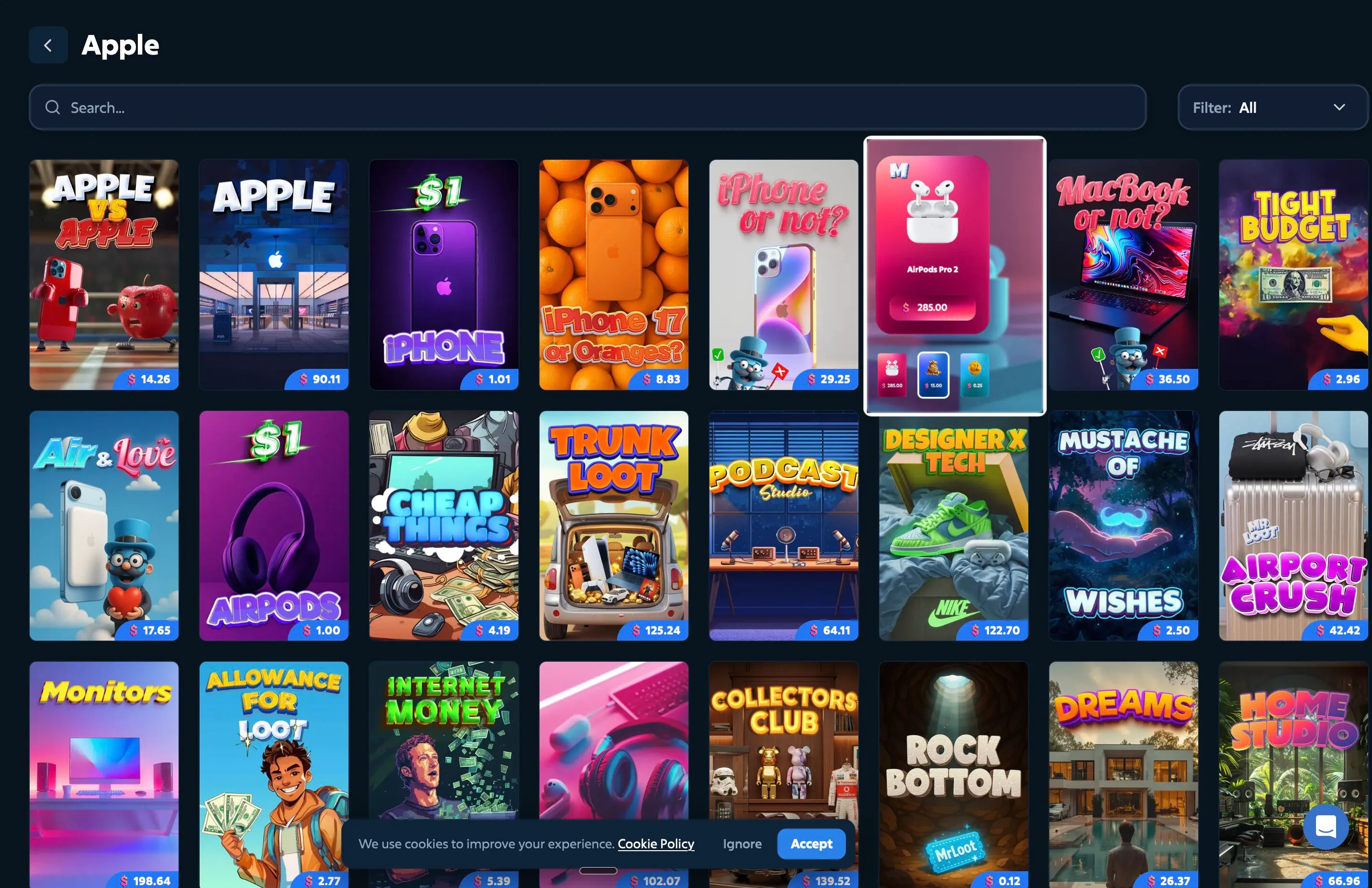
A mystery box site is an online platform where you buy a sealed “box” for a fixed price and receive a random item from a set list of possible contents. It is the online, gamified version of a blind box or a trading-card booster pack. Sites like HypeDrop, Packdraw, and MrLoot run thousands of themed boxes containing anything from cheap novelties to sneakers, tech, watches, and cars.
Two features separate a legitimate mystery box site from a simple lottery: published odds (you can see the probability of each prize before buying) and a provably-fair system (you can verify after opening that the result was not manipulated). A site that offers neither should be avoided.
How opening a mystery box works, step by step
The core loop is the same across almost every platform:
- Deposit funds. Add money with a card, Apple Pay, PayPal, or cryptocurrency. Most sites convert your balance into site coins or credit.
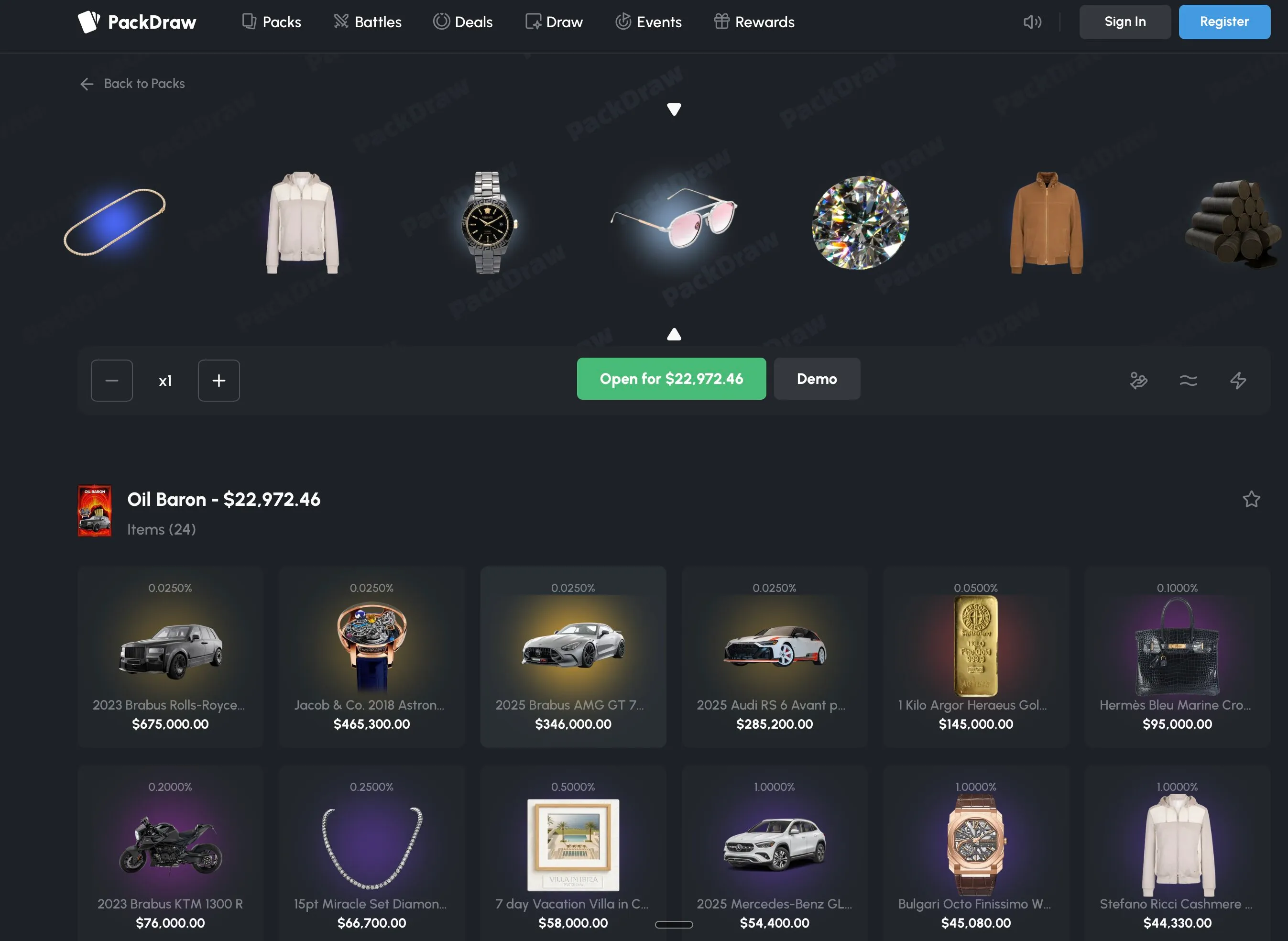
- Choose a box. Browse boxes by theme and price. Each box lists its possible prizes and the exact odds of landing each one.
- Open the box. A provably-fair random draw selects your item and shows an animated reveal.
- Decide what to do with your prize. You typically have three options: ship the physical item to your address, sell it back to the site for credit to keep playing, or withdraw its value (usually in crypto).
Many sites add extra modes on top of standard opening — battles (several players open the same box, best prize wins), trade-ups (combine items for a shot at something bigger), and custom boxes. The underlying mechanics are identical: a random draw against published odds.
How the odds and “provably fair” system work
“Provably fair” is a cryptographic method that lets you confirm a box result was not changed after you committed to opening it. It uses three ingredients:
- Server seed — a secret value the site generates and shows you as a hash (a scrambled fingerprint) before you open.
- Client seed — a value you control, often auto-generated in your browser.
- Nonce — a counter that increases with each opening.
The site combines these to produce your result. Because the server seed was committed as a hash beforehand, you can — after opening — reveal the original seed and recompute the result yourself. If it matches, the draw was fair. Most reputable sites have a “verify” page for exactly this. Our provably fair explainer walks through a verification step by step.
One thing provably fair does not do: it does not make a box profitable. It proves a specific draw was honest; it says nothing about whether the box offers good value.
House edge, RTP and expected value
This is the most important concept, and the one operators downplay. Every mystery box carries a house edge — the built-in margin that makes the platform money. The flip side is RTP (return to player) or expected value (EV): the average value you get back per dollar spent.
- If a box has an RTP of 75%, then on average you get back $75 of value for every $100 you spend. The house edge is 25%.
- Cheaper boxes tend to have better RTP; premium and “luxury” boxes often have the worst, sometimes a house edge near 90%.
Across the sites we’ve tested, realized value typically lands in the 65–80% range when you sell items back, and higher — up to about 92% on the best sites — if you take physical delivery and resell the item yourself. In plain terms: the more expensive the box and the more you sell back for instant credit, the more you lose on average. You can estimate any box’s real value with our True Odds calculator before you spend.
| Term | What it means | Rule of thumb |
|---|---|---|
| House edge | The platform’s built-in margin | Lower is better; avoid 85%+ |
| RTP / EV | Average value returned per $ spent | 75%+ is decent for the category |
| Sell-back rate | Credit you get for returning an item | Usually 65–80% of listed value |
Shipping vs selling back: the value decision
After you win an item, how you claim it changes how much value you keep:
- Ship the item. You receive the physical product. If you resell it yourself, this usually recovers the most value (often 90%+), because you avoid the site’s discounted buy-back rate. The downside is shipping time (typically 1–3 weeks) and, for high-value items, possible customs duty.
- Sell it back for credit. Instant and convenient, but you accept a discounted rate (often 65–80% of the item’s listed value) and the credit can only be spent on more boxes.
- Withdraw the value. Most sites pay withdrawals in cryptocurrency only, with a minimum threshold. You generally cannot withdraw a deposit you have not wagered.
The value-maximizing play on most platforms is to ship and resell winners you don’t want, rather than taking instant sell-back credit.
How deposits and withdrawals work
Deposits are usually flexible: cards, Apple Pay, Google Pay, sometimes PayPal, and a range of cryptocurrencies. Withdrawals are where sites differ most, and where problems tend to appear:
- Most sites pay out in crypto only, even if you deposited by card, so you need a crypto wallet to cash out.
- There is almost always a minimum withdrawal (commonly $15–$50) and a KYC identity check above a certain threshold.
- Reliable sites clear withdrawals in minutes to a couple of days. Repeated reports of delayed or cancelled payouts are the clearest warning sign of a bad platform — it is the single thing we weight most heavily in our reviews.
Are mystery boxes gambling?
Legally, it is disputed and evolving. Functionally, mystery boxes sit between retail and gambling: unlike pure gambling, you always receive an item of some value, but like gambling, the outcome is random and the average return is below your spend. Some operators face lawsuits over whether the model counts as unlicensed gambling. We cover this fully in are mystery boxes gambling? and the US legality guide. Every reputable site is 18+.
How to spot a scam mystery box site
Most mystery box sites are entertainment products with a house edge; a minority are genuinely dangerous. Warning signs we’ve seen on sites that later collapsed or trapped funds:
- Hidden odds — you cannot see each prize’s probability.
- No provably-fair verification, or seeds you cannot check.
- Payout problems — delays, cancellations, or being asked to re-deposit before withdrawing.
- Credit-only “refunds” you cannot cash out.
- No named operating company or an opaque offshore registration with no track record.
- A weak, recent, or sharply negative review base (check recent reviews, not just the average).
Two platforms we reviewed — Lootie and DrakeMall — shut down and left users with trapped funds, which is why we test payouts and reputation before recommending anyone. Read how to spot a scam mystery box site for the full checklist.
How to choose a mystery box site
Put the criteria together and a good site looks like this:
- Published per-item odds and working provably-fair verification.
- A reasonable house edge (prefer sites where value recovery is 75%+).
- A clean payout record — fast, reliable withdrawals with no pattern of cancellations.
- A transparent operator and a healthy, recent review base.
- Shipping to your country and payment methods you can actually use.
Our independently scored best mystery box sites ranking applies exactly these criteria, and each review shows the site’s odds transparency, tested value, and payout reliability. Whatever you choose, treat mystery boxes as paid entertainment, set a budget, and never chase losses — see our responsible play guide.
Frequently asked questions
How do mystery boxes work in simple terms? You pay a set price to open a digital box, a provably-fair random draw picks one prize from a published list, and you either ship the item, sell it back for credit, or withdraw its value. Every box shows the odds before you buy, but the average box returns less than it costs.
Do you really get real products from mystery boxes? Yes, on legitimate sites. You can have physical items shipped to you, or take their value as credit or crypto. The risk is not that prizes are fake, but that the average value returned is below what you spend.
What does “provably fair” mean? It is a cryptographic system (server seed + client seed + nonce) that lets you verify, after opening, that your result was not altered. It proves a draw was honest, but it does not remove the house edge.
What is a good RTP for a mystery box? For this category, 75% or higher (a house edge of 25% or less) is reasonable. Instant sell-back usually returns 65–80% of listed value; shipping and reselling yourself recovers more.
Can you make money from mystery boxes? No, not reliably. Every box has a house edge, so on average you lose money. Treat mystery boxes as entertainment, not income.
How do you withdraw money from a mystery box site? Most sites pay withdrawals in cryptocurrency only, with a minimum threshold and an identity (KYC) check above a certain amount. You typically must wager a deposit before withdrawing.
Independent guide. No brand pays for placement. 18+. Mystery box openings carry a house edge; treat them as entertainment. Last updated August 2026.